
Grants for Church Repairs: Common Mistakes That Lead to Rejection
Avoid common mistakes that can weaken your church repair grant application. Learn six ways to strengthen your proposal, document repair needs, and improve your chances of securing funding for essential facility improvements.
By Exousia Team
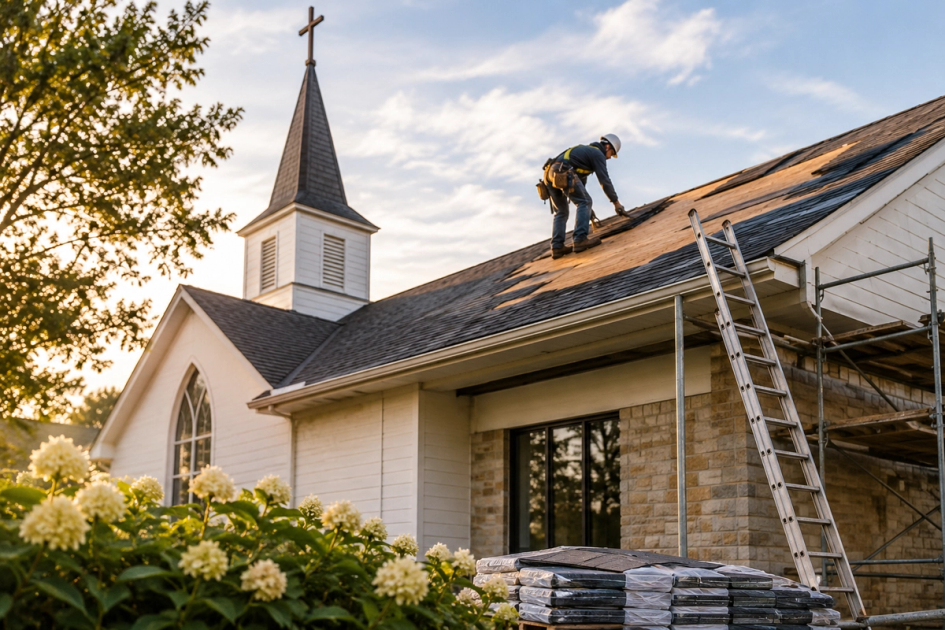
A leaking roof over your food pantry can disrupt weekly service long before the damage becomes severe. Similarly, failing HVAC equipment, unsafe flooring, or an inaccessible entrance can each limit the programs your church provides.
Grants for church repairs may help pay for qualifying work. To turn that facility need into a competitive request, your application has to connect the repair to the funder’s requirements. Reviewers need to see that your church is eligible, the project fits the opportunity, the costs are supported, and the repair will protect or strengthen a specific community service.
Even a well-prepared application may be declined when a funder has more qualified requests than available funding. Still, your church can prevent many of the problems that weaken an application before it reaches that point.
The six mistakes that follow are problems your church can address before submission.
Mistake 1: Applying for Grants for Church Repairs Before Checking Eligibility
A promising opportunity can take up weeks of staff time without delivering funding if your church or repair falls outside the funder’s requirements. Before you start drafting, check:
- The applicant type
- Geographic limits
- Eligible expenses
- Property use rules
- Deadline
- The tax documentation the funder requests
Churches that meet Section 501(c)(3) requirements are generally tax-exempt without applying to the IRS for formal recognition. Even so, an individual funder may ask for an IRS determination letter or other proof of nonprofit status.
What disqualifies a church from getting a grant? Sometimes, the problem is an excluded project type, an ineligible location, or a cost the program won’t pay.
Church repair grants from private foundations may have very different requirements than federal grants for church repairs, too, which makes funder research valuable before your team starts building a proposal.
Mistake 2: Focusing on the Building Instead of the People It Serves
A building matters most because of what happens inside it. When you apply for church property repair funding, reviewers need to see how the facility problem affects a service, the people who participate, or your church’s ability to keep a community program operating.
Suppose your ministry is pursuing grants for church roof repairs because water enters a specific classroom wing. If those rooms host an after-school tutoring program four days a week, state how many students use the space, how the leaks interfere with the program, and what the repaired roof will allow your ministry to continue providing to the local community.
The same approach applies to church facility improvement grants. In addition to sharing details about the program that uses the space and how often it operates, you’ll need to describe what will change after the improvement is made.
Mistake 3: Submitting a Repair Plan Without Enough Supporting Detail
A reviewer needs enough detail to judge whether the proposed work makes sense. Depending on the application, supporting material may include contractor estimates, photos, property records, a building assessment, board approval, insurance records, or permit information.
The documentation you need can also depend on the type of repair:
- Church Maintenance Grants: A request for major maintenance work, such as replacing an aging HVAC unit or repairing plumbing or electrical problems, may need to show that the expense goes beyond routine upkeep. Maintenance records, equipment age, or a history of recurring problems can help explain why the work is necessary.
- Grants for Aging Church Buildings: An older facility may need a condition assessment, maintenance history, or plan for preventing the same problem from returning after the funded repair.
- Grants for Historic Church Buildings: Preservation funding may require documentation of historic significance, specialized assessments, or plans showing that the proposed work follows applicable preservation requirements.
Keeping church grant documents organized can also reduce the chance that a good opportunity stalls while staff members search for records.
Mistake 4: Letting the Budget Tell a Different Story From the Proposal
Your narrative, estimates, and budget should describe the same repair. If the proposal says the grant will fund a roof replacement and repair water-damaged ceilings, those activities and their costs should appear consistently in the financial documents.
Problems arise when a contractor quote totals one amount while the application requests another. The same is true when an expense appears in the budget without a matching task in the project description. Some nonprofit building repair grants also limit certain categories of spending, so compare every requested cost with the program rules before finalizing your budget.
Mistake 5: Rushing the Application and Missing Required Pieces
A strong repair project can lose consideration because the submission is incomplete. A short timeline raises the risk of unanswered questions, missing attachments, conflicting dates, incorrect totals, absent signatures, or a final draft that hasn’t received leadership and financial review.
If you’re learning how to write a successful church repair grant, build a thorough review into the schedule from the beginning. Give ministry leaders time to verify how the space is used, ask finance staff to confirm the figures, and make sure the person submitting the application has the final version of every required file.
Ask someone who didn’t draft the proposal to perform a proposal review before submission. A second reader can catch skipped questions, unexplained terms, and places where the draft assumes the funder already knows your church.
Complex applications can also overwhelm a staff member who is handling grants alongside other ministry duties. A church grant writer can coordinate drafts, document requests, reviews, and submission while your leaders remain responsible for the project facts and financial decisions.
Mistake 6: Treating Program-Specific Repair Grants Like Standard Applications
Some repair opportunities add requirements that don’t appear in a typical private foundation request. Church renovation grants tied to historic preservation, public programs, or disaster recovery may come with different rules for documentation, eligible work, timing, or property use.
Before finalizing a request for church restoration grants, compare the project with the applicable historic preservation requirements so your estimates and repair scope reflect the program you plan to pursue.
Disaster relief grants for churches create a different set of questions. Eligibility can depend on the declared event, location, applicant, damaged facility, and type of work. Under FEMA’s faith-based disaster guidance, certain houses of worship and religious nonprofits may qualify for Public Assistance when the applicable conditions are met, so document damage and costs from the beginning and check the rules tied to the specific disaster.
Before You Submit: Check for Preventable Application Errors
When you’re working through how to apply for church repair grants, give the application two final reviews. First, confirm that your church, project, location, expenses, and funding amount fit the opportunity, including any matching or reimbursement terms.
Next, compare the narrative with the budget, estimates, dates, forms, signatures, and attachments. Make sure every required question has an answer and every required file is included.
Need a little help? Churches that want to develop a more consistent internal process can use the Online Institute to build skills in proposal preparation and grant management.
FAQ
What Do Grants for Church Infrastructure Usually Cover?
Depending on the funder, grants for church infrastructure may help support major property needs such as foundation stabilization, sewer or septic work, stormwater drainage, retaining walls, or other improvements tied to the basic function of the property. Eligible costs vary by program, so confirm whether a funder allows your specific type of work.
Are Church Building Repair Grants Paid Upfront?
Not always. Some grants for church building repairs require matching funds or reimburse approved costs after your church has already paid them. Account for those terms in your cash-flow plan before committing to the project. A well-built project budget should show where each requested expense belongs and how the church will cover costs outside the grant.
Strengthen Your Next Church Repair Grant Request
Grants for church repairs are stronger when the opportunity fits your church, the repair need is documented, the proposal connects the building to real community service, and the financial details match the work being requested. Careful review before submission gives your team the best chance to present the project accurately and completely.
At Exousia, our ministry experience shapes how we work with churches and faith-based nonprofits. Our founders, Kevin and Dani Arthur, have decades of ministry and nonprofit administration experience. They have helped secure more than $2 million in grant funding for church-based programs for childcare, youth services, food assistance, mental health initiatives, and community recreation.
We support churches through research, consultation, proposal writing, education, and back-end grant management. Our grant support options allow your church to choose the level of help that fits the repair project and your internal capacity.
You can share your repair plans, contractor estimates, current records, and funding goals with us. We can help you consider suitable opportunities and determine which services best fit the work your church wants to complete.
Next step
Reading is the easy part.
Bring us the deadline you are staring at. We will tell you plainly whether you are ready for it, and what it takes if you are not.
Start the ConversationFree 20-minute fit conversation